
Introduction
Heard of the old-school trick where people literally put cash into labeled envelopes for groceries, rent, and fun money — and wondered if that even makes sense anymore when most payments happen through UPI? Fair question. The envelope budgeting method actually still works surprisingly well in 2026, just in a digital form rather than literal paper envelopes stuffed with cash.
What Is the Envelope Budgeting Method, Originally?
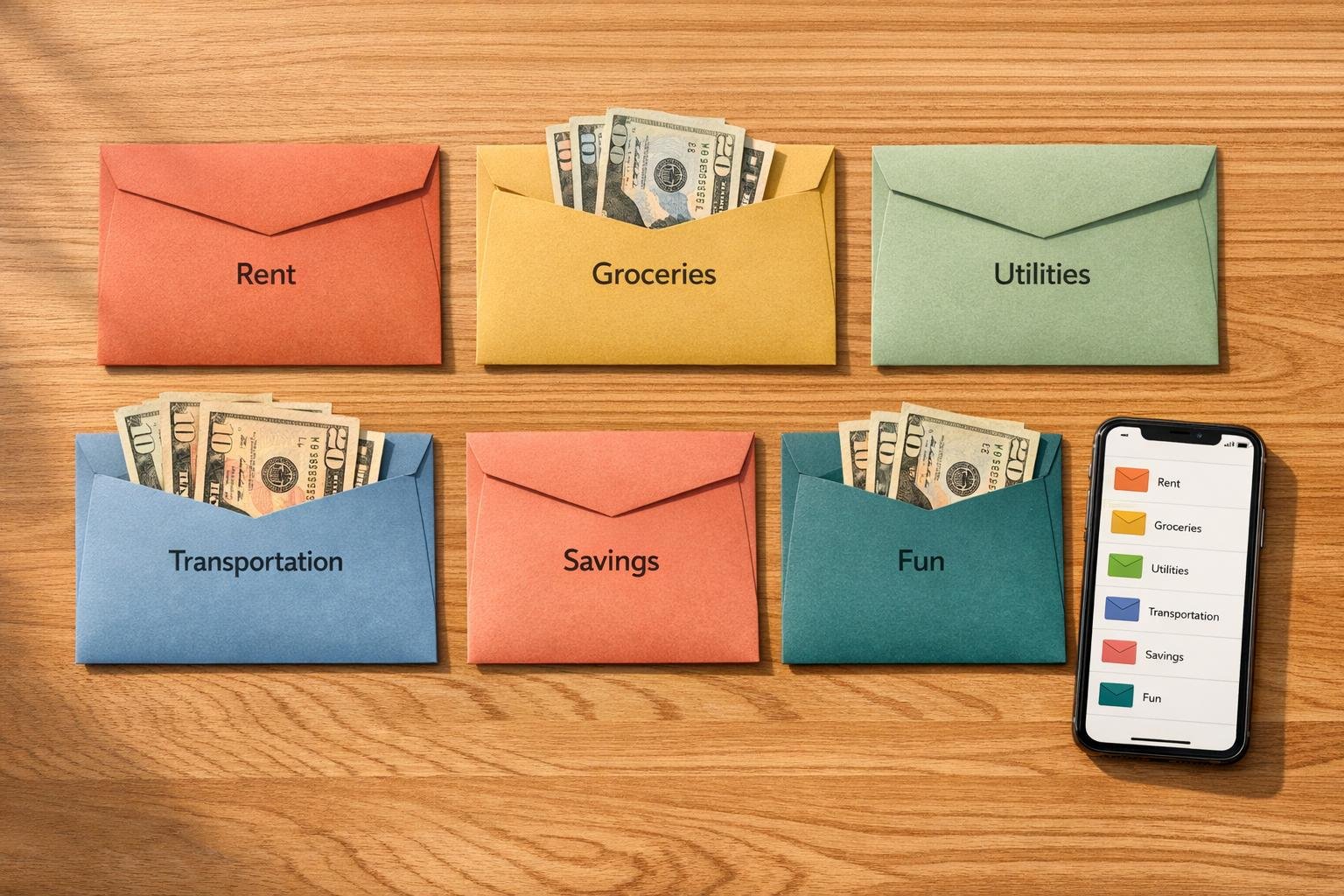
The classic version: you withdraw cash at the start of the month, divide it into physical envelopes labeled by category (groceries, entertainment, transport), and once an envelope is empty, spending in that category stops until next month. It’s blunt, but that bluntness is exactly why it works — there’s no ambiguity about whether you can afford something.
Why This Method Still Has Real Value
Quick answer: The envelope budgeting method works because it creates a hard spending limit per category with zero flexibility to “borrow” from another category mentally — a discipline that many digital, credit-card-driven budgets lack entirely.
Adapting It for a Digital, UPI-Heavy World
Since most spending in India now happens through UPI or cards rather than cash, the modern version uses separate digital “envelopes” instead:
- Open separate bank accounts or use a banking app’s “sub-account” or “vault” feature for different categories
- Transfer your budgeted amount into each digital envelope at the start of the month
- Spend from that specific account/card for that category only
- Once it’s empty, that category is done for the month
Physical Cash Envelopes — Still Relevant for Some Categories
For categories where you tend to overspend impulsively — dining out, shopping, entertainment — some people still find literal cash envelopes more effective than digital ones, since physically running out of cash creates a stronger psychological stop than seeing a low digital balance.
Which Categories Work Best With This Method?
- Groceries — a genuinely fixed, trackable monthly category
- Entertainment and dining out — where impulse overspending happens most
- Personal shopping/discretionary spending — clothes, gadgets, hobbies
- Fixed needs like rent or EMIs generally don’t need this treatment since they’re not flexible anyway
A Real Example Setup
Picture someone in Jaipur using this method for three flexible categories out of their ₹40,000 monthly income:
- Groceries envelope: ₹6,000
- Dining out envelope: ₹3,000
- Shopping envelope: ₹2,500
Once the dining-out envelope hits zero mid-month, that’s the actual, hard stop — no swiping the credit card “just this once,” because the whole point of the method is removing that flexibility.
Combining It With the 50/30/20 Rule
The envelope method works well as an execution tool for whichever framework you’re already using — for instance, applying it specifically to your “wants” bucket under the 50/30/20 rule [link to related guide on the 50/30/20 budget rule here], since that’s usually where the actual overspending happens.
Apps That Digitize This Method
Several budgeting apps now offer built-in “envelope” or “jar” features that let you allocate a total budget across virtual categories without needing separate bank accounts — worth exploring if managing multiple physical accounts feels like too much overhead.
Downsides of This Method Worth Knowing
- Managing multiple bank accounts or digital sub-accounts adds some administrative overhead
- Doesn’t naturally account for irregular expenses unless you build in a separate buffer envelope
- Can feel restrictive initially, especially if you’re used to more flexible spending across categories
FAQ
Is the envelope budgeting method only for cash spending? Not anymore — while it originated as a cash-based system, it adapts well to digital spending using separate accounts or app-based virtual envelopes for the same category-limiting effect.
How many categories should I use in the envelope budgeting method? Starting with 3-5 categories, focused on where you tend to overspend, works better than trying to envelope every single expense category from day one.
Can the envelope budgeting method work with a variable income? Yes, though you may need to adjust the envelope amounts each month based on that month’s actual income rather than fixing them permanently.
What happens if I run out of money in an envelope before the month ends? The whole point of the method is that spending in that category stops until next month — this hard boundary is what makes it effective, though some people allow limited borrowing from a “buffer” envelope for genuine needs.
Is the envelope budgeting method better than a regular monthly budget? It’s not necessarily better, but it adds stronger enforcement for people who find regular soft budget limits too easy to ignore in the moment.
Conclusion
The envelope budgeting method has genuinely aged well into 2026, just in digital form rather than literal paper envelopes — the core idea of a hard category limit still works as effectively as ever. Start with 2-3 categories where you overspend most, and expand from there if it clicks for you. [link to related guide on how to create a monthly budget here] to see how this method fits into a broader budgeting plan.
Suggested Alt Text: “Digital envelope budgeting app interface showing category-wise spending limits”
